
| Quick answer: A higher base-curve number describes a flatter contact lens. A lower number describes a steeper lens. Diameter also affects fit, so BC and diameter must be considered together – not chosen using a simple conversion chart. |
If you have ever compared two contact lenses, you may have noticed numbers such as 8.6 mm for base curve and 14.2 mm for diameter. These measurements are important, but they do not tell the whole fitting story. A soft lens must work with the shape of your cornea and the surrounding eye surface, while also allowing suitable movement, comfort and vision.
This guide explains what BC and diameter mean, why a higher BC is not steeper, and what excessive lens movement may indicate.
Table of contents
- What Is Contact Lens Base Curve?
- What Is Contact Lens Diameter?
- How Base Curve and Diameter Work Together
- Is ‘Higher BC = Smaller Diameter’ Correct?
- What About a Steeper or Flatter Eye?
- What If the Contact Lens Moves Too Much?
- What If the Lens Hardly Moves?
- Can You Change Only the BC or Diameter?
- What If Your Preferred Diameter Is Not Available?
- Frequently Asked Questions
- The Bottom Line
- Important Safety Note
Estimated reading time: 8 minutes
What Is Contact Lens Base Curve?
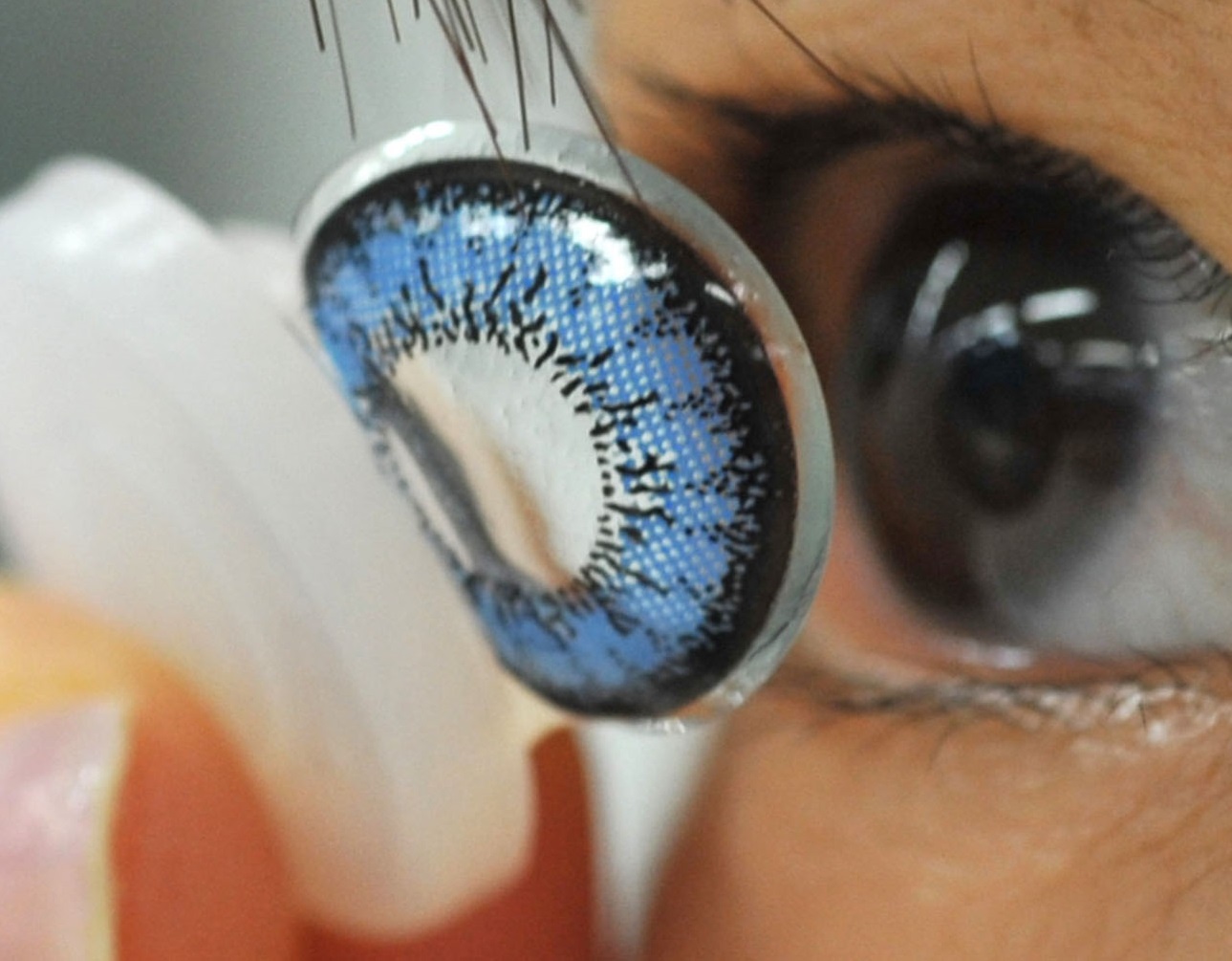
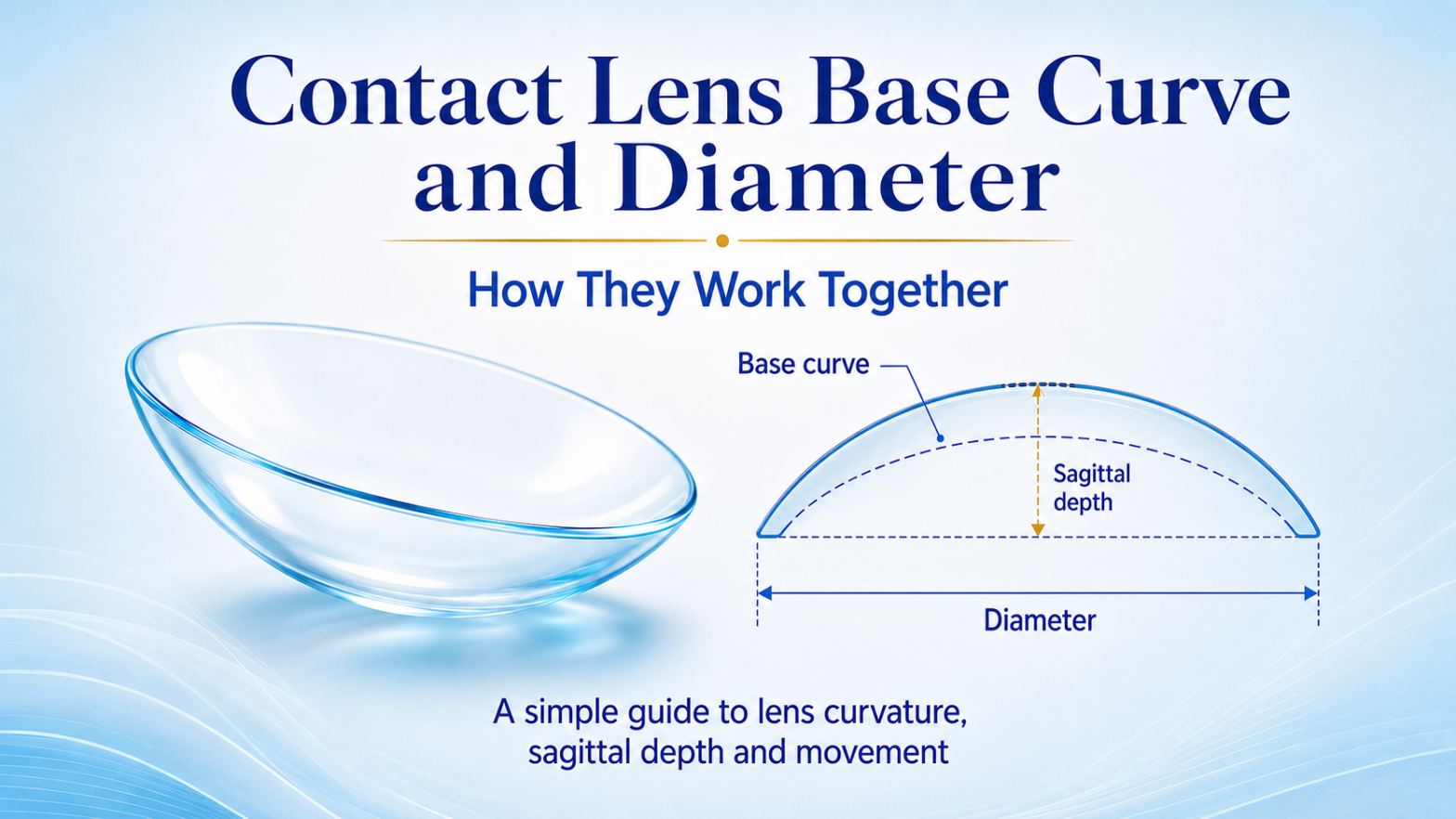
Base curve, usually written as BC, is the radius of curvature of the back surface of a contact lens. It is measured in millimetres.
- A lower BC number, such as 8.4 mm, generally describes a steeper lens curve.
- A higher BC number, such as 8.8 mm, generally describes a flatter lens curve.
| Remember: When BC is expressed as a radius in millimetres, a larger number means a flatter curve. This is the opposite of corneal power expressed in dioptres, where a higher number means a steeper cornea. |
What Is Contact Lens Diameter?
Diameter, shown as DIA, is the full width of the contact lens from edge to edge. It is also measured in millimetres. For soft lenses, diameter affects how much of the cornea and nearby white part of the eye the lens covers.
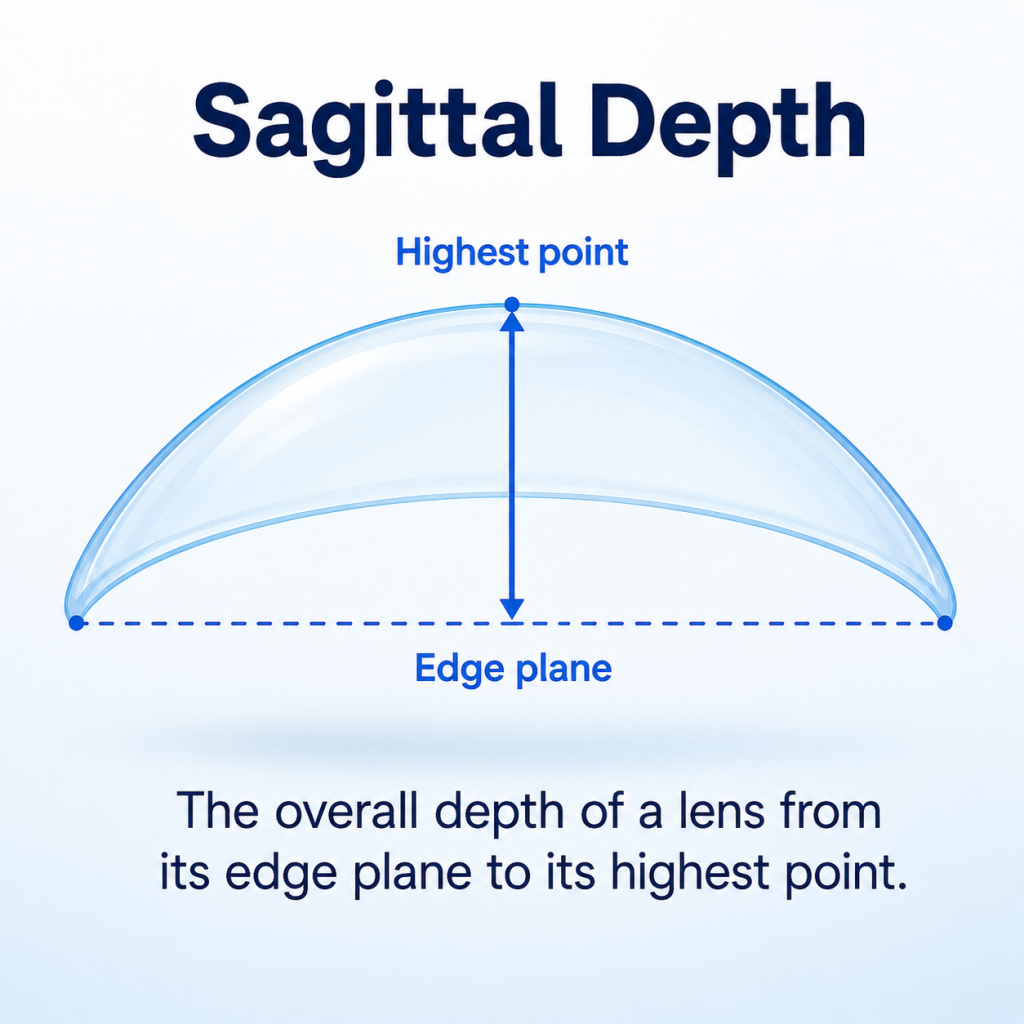
When the rest of the lens design stays the same, increasing the diameter generally increases the lens’s sagittal depth. Decreasing the diameter generally reduces it. Sagittal depth is the overall depth of the lens from its edge plane to its highest point.
How Base Curve and Diameter Work Together
Soft-lens fit depends more closely on the lens’s overall sagittal depth and peripheral design than on the BC number alone. Base curve and diameter both influence sagittal depth, but material, thickness, optic-zone size, peripheral curves and edge design matter too.
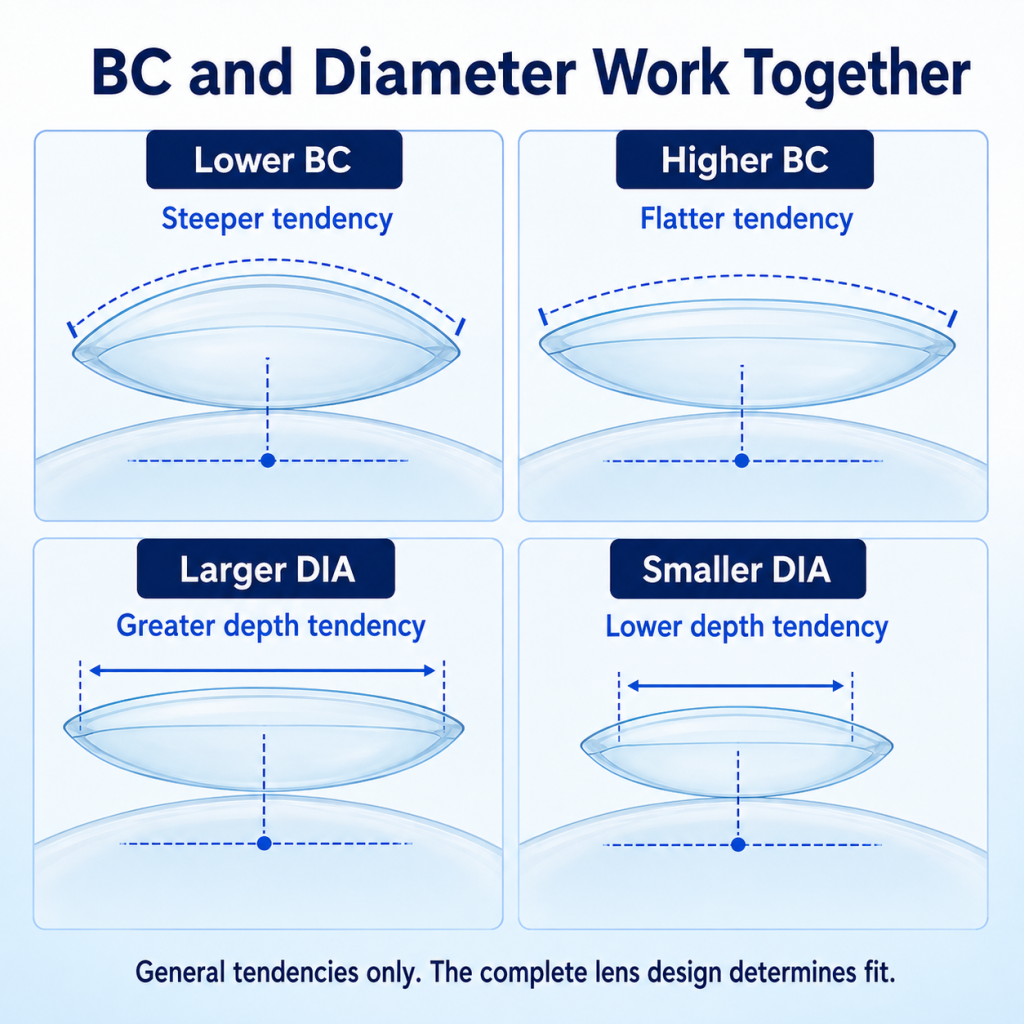
| Parameter change | Usual geometric effect* | Possible fitting tendency* |
| Lower BC number | Steeper back curve | May increase sagittal depth / tighten fit |
| Higher BC number | Flatter back curve | May reduce sagittal depth / loosen fit |
| Larger diameter | Greater overall depth | May tighten or stabilise fit |
| Smaller diameter | Lower overall depth | May loosen fit |
*These are general tendencies only when other design features remain comparable. They are not instructions for changing a prescription.
Is ‘Higher BC = Smaller Diameter’ Correct?
No. It is not a reliable general rule. A higher BC makes a lens flatter, while a smaller diameter usually also reduces sagittal depth. Both changes can move the fit in a looser direction.
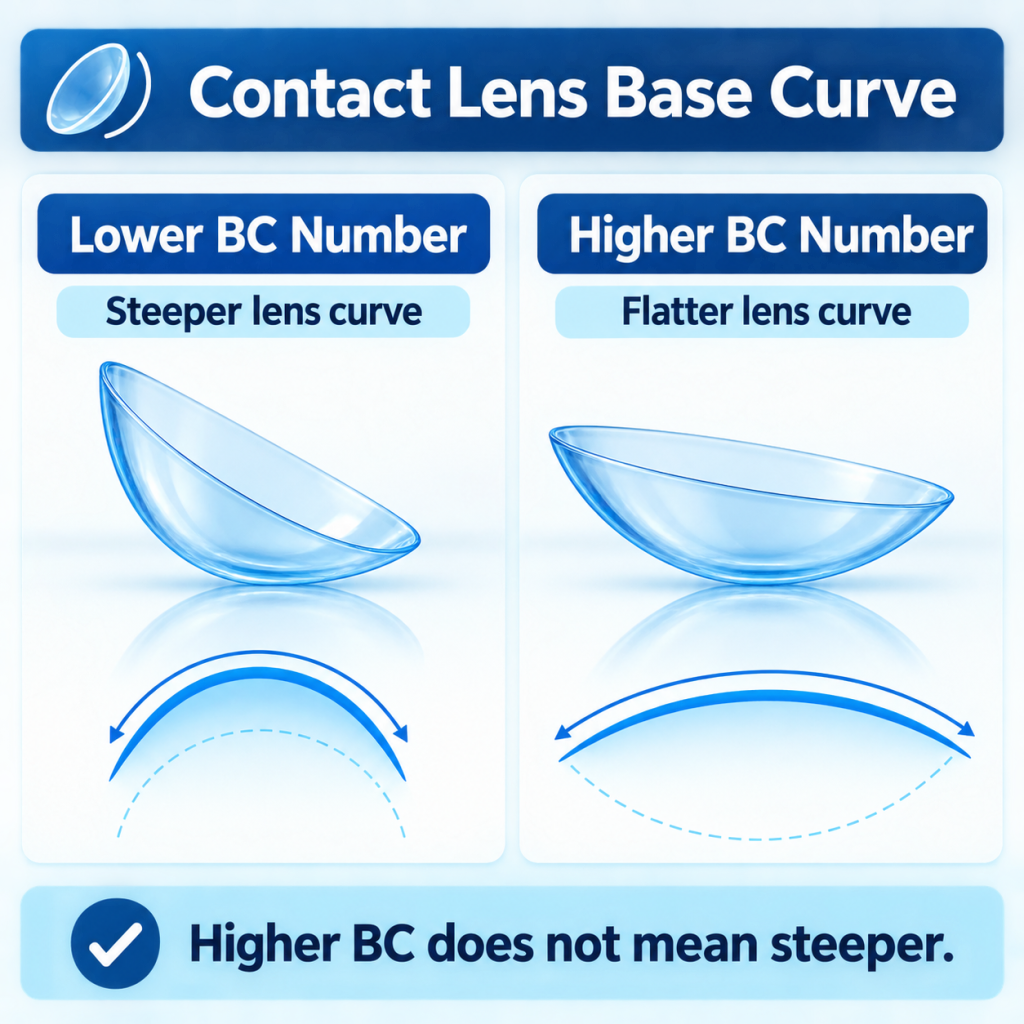
If a fitter wanted to keep a broadly similar sagittal depth after selecting a flatter, higher-BC lens, a larger diameter might sometimes provide compensation. In the opposite direction, a steeper, lower-BC lens might sometimes be paired with a smaller diameter. However, this is a geometric tendency – not a universal BC-to-DIA formula.
| Why there is no conversion chart: Two lenses with the same printed BC and DIA can behave differently because their materials, peripheral curves, optic zones, thickness profiles and edge designs are different. |
What About a Steeper or Flatter Eye?
It is tempting to match a steep eye with a steep lens and a flat eye with a flat lens, but soft lenses drape over the eye and extend beyond the cornea. Corneal curvature alone therefore cannot determine the ideal BC or diameter.
- A steeper eye may need a lens with sufficient sagittal depth, but that does not automatically mean choosing a particular BC number.
- A flatter eye may need less sagittal depth, but lens diameter and the complete design still affect the result.
- An eye care professional confirms the fit by examining centration, coverage, movement, vision and the eye’s response to the lens.
What If the Contact Lens Moves Too Much?
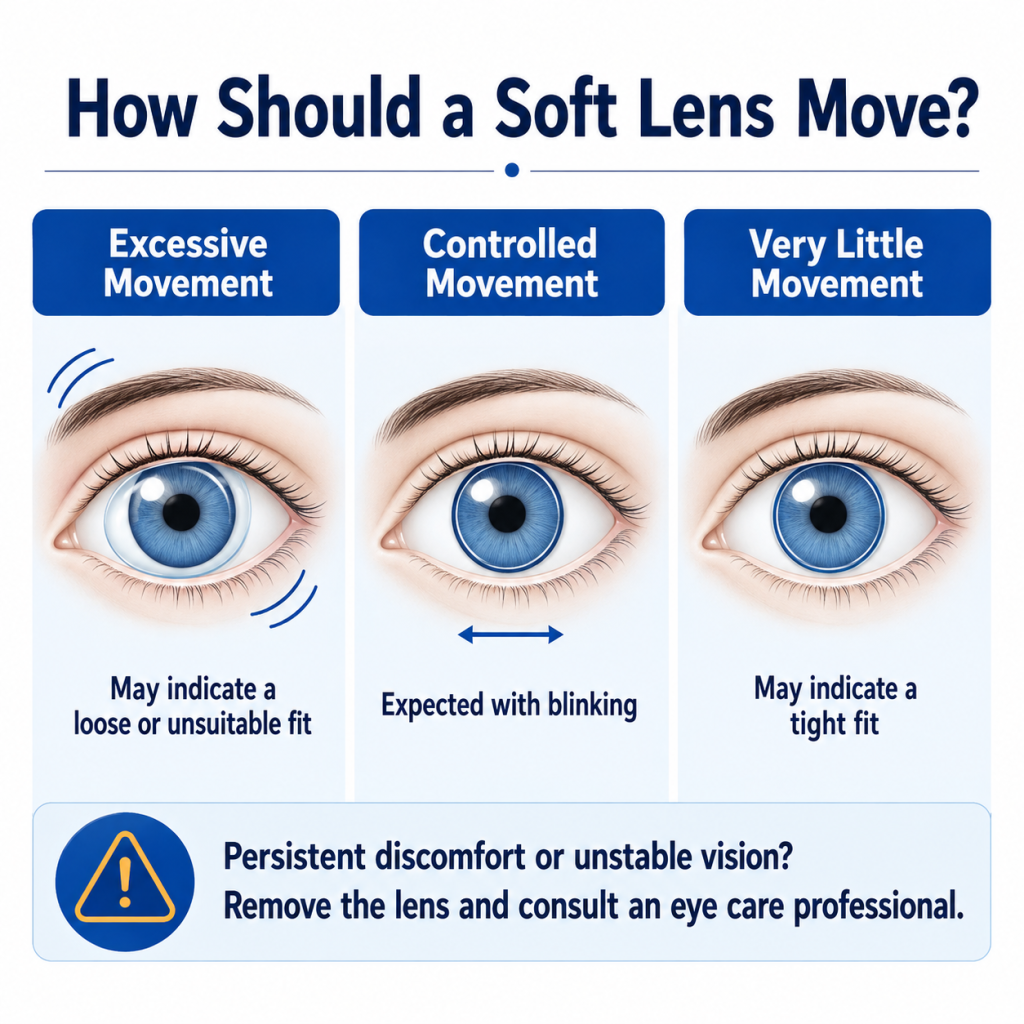
Some movement with blinking is normal and necessary. Excessive movement, decentration, unstable vision or the feeling that a lens may fall out can suggest a loose or unsuitable fit. Within the same lens design and diameter, a fitter may assess a lower BC number to create a steeper fit. A larger diameter may also increase sagittal depth and stability.
However, do not assume that changing to a lower BC is always the answer. Excessive movement can also occur when a lens is inside out, damaged, dry, poorly centred or simply incompatible with the wearer’s eye shape. Changing brands introduces additional design differences.
| What to do: Remove the lens if it is uncomfortable or vision is unstable. Check that it is clean, undamaged and not inside out. If the problem continues, stop wearing it and ask an eye care professional to evaluate the lens on your eye. |
What If the Lens Hardly Moves?
A lens that moves very little may be fitting too tightly, but movement alone is not enough to diagnose the problem. Tight lenses may feel comfortable at first and still cause redness, fluctuating vision or discomfort later in the day. A fitter may consider a flatter, higher-BC design, a smaller diameter or a different lens altogether after examining the eye.
Can You Change Only the BC or Diameter?
Not safely as a self-service decision. Contact lenses are medical devices, and a valid prescription identifies more than power. Depending on the prescription and market, it may include the manufacturer or material, BC and diameter. The FDA also warns that brands can differ in water content and shape, so substitutions should be approved by an eye care professional.
What If Your Preferred Diameter Is Not Available?
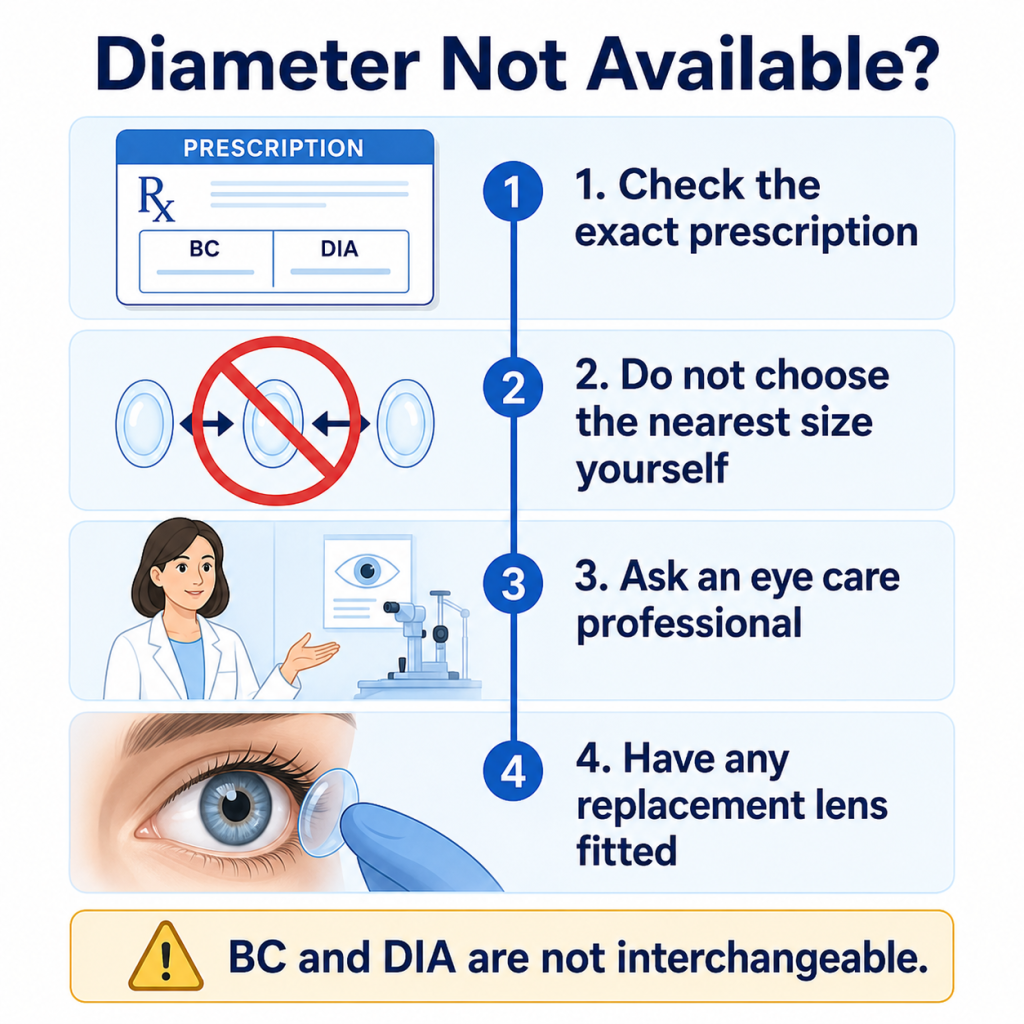
Do not select the nearest diameter or alter the BC to compensate on your own. Instead:
- Check the exact brand, model, BC and DIA on your current prescription or lens packaging.
- Ask your eye care professional whether another available specification in the same lens design is appropriate.
- If changing brand or design, have the new lens fitted and assessed on the eye.
- Do not continue wearing a lens that causes persistent movement, discomfort, redness or unstable vision.
Frequently Asked Questions
Does a higher BC mean a steeper eye?
No. A higher BC radius in millimetres means a flatter lens curve. A higher corneal reading in dioptres means a steeper cornea. The units describe curvature differently, which is why the terms are often confused.
Should a higher-BC lens have a larger diameter?
Sometimes a larger diameter can help maintain sagittal depth when the BC becomes flatter, but this is not a universal rule. The full lens design must be considered.
If my lens moves excessively, should I choose a lower BC?
A fitter may try a lower BC within the same design because it can create a steeper fit, but buyers should not make this change based on symptoms alone. The lens should be assessed on the eye.
Is a lens with no movement a good fit?
Not necessarily. A soft lens should normally show controlled movement with blinking. Too little movement can indicate a tight fit and should be assessed professionally.
Can two lenses with identical BC and DIA fit differently?
Yes. Material, modulus, optic-zone size, peripheral curves, thickness and edge design can all change how a lens behaves.
The Bottom Line
Base curve and diameter are connected, but neither number should be used alone to select a soft contact lens. A higher BC number is flatter; a lower BC number is steeper. A larger diameter generally increases sagittal depth, while a smaller diameter generally decreases it. These relationships help explain lens behaviour, but they do not replace a professional fitting.
Always buy the exact lens specified by a current prescription. If a lens moves excessively, barely moves, feels uncomfortable or causes unstable vision, remove it and consult an eye care professional.
Important Safety Note
| Seek prompt care: Remove your lenses and contact an eye doctor immediately if you develop eye pain, marked redness, light sensitivity, sudden blurred vision, unusual watering or discharge. Do not wear the lenses again until advised. |
Related Links: