
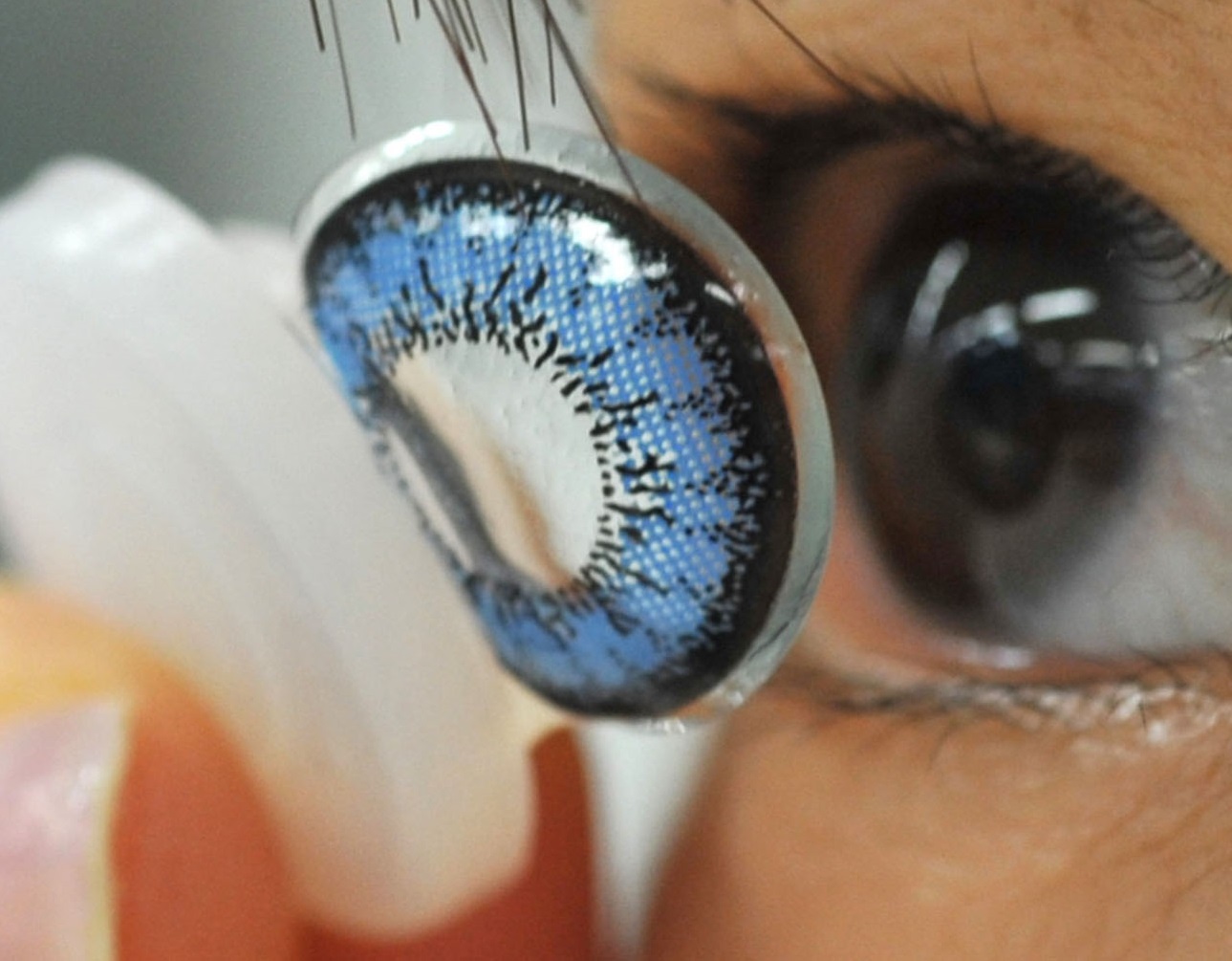
Cold air outdoors and heated air indoors can both make contact lenses feel less comfortable. Add longer screen sessions, winter wind and holiday makeup, and you may notice dryness, grittiness, watering or intermittent blur sooner than usual.
That does not mean you must automatically stop wearing colored contacts throughout winter. The safer approach is to keep your fitting and prescription current, reduce avoidable dryness, follow your prescribed wearing schedule and remove the lenses whenever your eyes do not feel right.
Table of contents
- Why contact lenses can feel drier in winter
- 1. Start with a proper contact lens fitting
- 2. Use only drops approved for contact lenses
- 3. Redirect heaters, fans and car vents
- 4. Blink fully and take regular screen breaks
- 5. Protect your eyes from winter wind
- 6. Follow the prescribed wearing and replacement schedule
- 7. Keep water away from contact lenses
- 8. Apply winter and holiday makeup in the safer order
- 9. Remove the lenses when your eyes send warning signs
- Can contact lenses freeze on your eyes?
- Are daily disposable lenses better for winter?
- Winter contact lens checklist
- Final reminder
Estimated reading time: 8 minutes
Why contact lenses can feel drier in winter
Winter exposes your eyes to two very different environments. Outside, cold air and wind can increase evaporation from the eye’s surface. Indoors, heaters, air-conditioning systems and car vents may direct warm, dry air toward your face. Screen use can add to the problem because people often blink less completely while concentrating.
Dryness can also cause reflex tearing. Watery eyes in cold weather do not always mean that the eye has enough stable lubrication; the tears may be a short-lived response to irritation.
1. Start with a proper contact lens fitting
Comfort begins with a lens that fits your eyes and suits your prescription. Base curve, diameter, material, replacement schedule and surface design can all affect how a lens behaves.
Do not choose a lens solely because it has high water content or is made from a particular material. No single material, water percentage or replacement schedule is best for everyone. If a lens repeatedly shifts, blurs or becomes uncomfortable, ask an eye-care professional to check the fit rather than trying to solve the problem only with drops.
2. Use only drops approved for contact lenses
A contact-compatible rewetting drop may help with temporary dryness caused by cold or heated environments. Check the label carefully because not every eye drop can be applied while lenses are in place.
Some products require you to remove your lenses and wait before reinserting them. Follow the product instructions and the advice of your eye-care professional. Redness-relief drops and medicated drops should not be treated as interchangeable with contact-lens rewetting drops.
If you are shopping at UNIQSO, review the instructions for IGEL Comfort Drops or Acuaiss Ultra Preservative-Free Moisturizing Drops before use. Product availability and directions should be checked again before publication.
3. Redirect heaters, fans and car vents
Avoid allowing heated air, a desk fan or a car vent to blow directly toward your eyes. Redirecting the airflow is a small change that may reduce tear-film evaporation and the gritty feeling that develops toward the end of the day.
A humidifier can help improve a very dry indoor environment, but it is not a substitute for proper lens fitting or professional advice. Clean the humidifier according to its instructions so that it does not circulate contaminants.
4. Blink fully and take regular screen breaks
People often blink less frequently and less completely when using a computer or phone. Make a conscious effort to blink fully and look away from the screen regularly.
The 20-20-20 rule is a useful reminder: about every 20 minutes, look at something around 20 feet away for at least 20 seconds. It does not treat an eye condition, but it can help you pause prolonged near work and remember to blink.
5. Protect your eyes from winter wind
Sunglasses are useful beyond summer. A pair with good coverage can reduce direct wind exposure and protect the eyes from ultraviolet light. Wear properly fitted goggles for skiing, snowboarding and other winter sports.
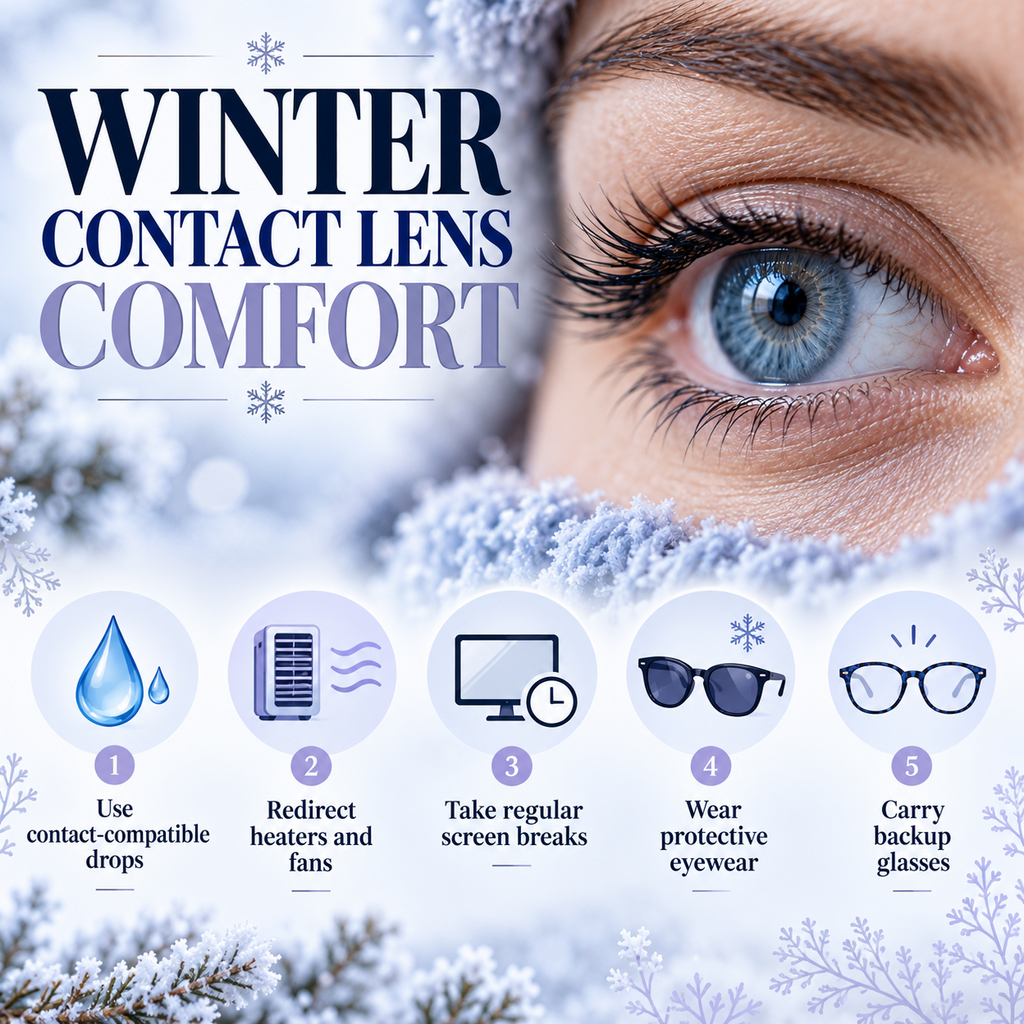
Contact lenses do not replace protective eyewear. They cover only part of the eye and should never be relied on as your sole protection against wind, UV exposure, snow, dust or impact.
6. Follow the prescribed wearing and replacement schedule
Winter discomfort is not a reason to stretch the life of a lens or sleep in it. Replace lenses according to the schedule prescribed for that specific product, even when they still appear clean.
Daily disposable lenses can reduce cleaning and storage steps because a fresh lens is used each time. They may be convenient for occasional holiday wear, travel or people who accumulate deposits on reusable lenses, but they are not automatically the best option for every eye. Browse daily disposable contacts and confirm suitability with your eye-care professional.
7. Keep water away from contact lenses
Wash your hands with soap and dry them thoroughly before touching your lenses. Do not rinse lenses or lens cases with tap water, bottled water, distilled water or saliva.
For reusable lenses, use the recommended fresh disinfecting solution and follow its instructions. Do not “top off” yesterday’s solution. Replace the lens case as advised and allow it to air-dry in a clean location.
Explore UNIQSO’s lens-care collection for compatible care products, but always follow the instructions supplied with your particular lenses and solution.
8. Apply winter and holiday makeup in the safer order
Insert soft contact lenses before applying makeup, provided your eye-care professional has advised that routine for your lenses. Remove the lenses before removing makeup.
Keep eyeliner away from the inner eyelid margin, where it can enter the tear film. Avoid loose glitter and products that shed fibres close to the eye. Apply sprays before inserting lenses when possible; otherwise close your eyes during spraying and wait for the mist to settle.
For winter looks, icy grey, blue and violet contacts can complement silver or lavender makeup, while brown and hazel lenses work well with warmer gold and berry tones. Browse colored contacts, but choose only lenses that match your fitting and prescription.
9. Remove the lenses when your eyes send warning signs
Take your lenses out if you develop pain, marked redness, persistent blur, light sensitivity, discharge, swelling or a sensation that does not settle after removal. Switch to backup glasses and seek professional advice promptly, especially if symptoms affect only one eye or become worse.
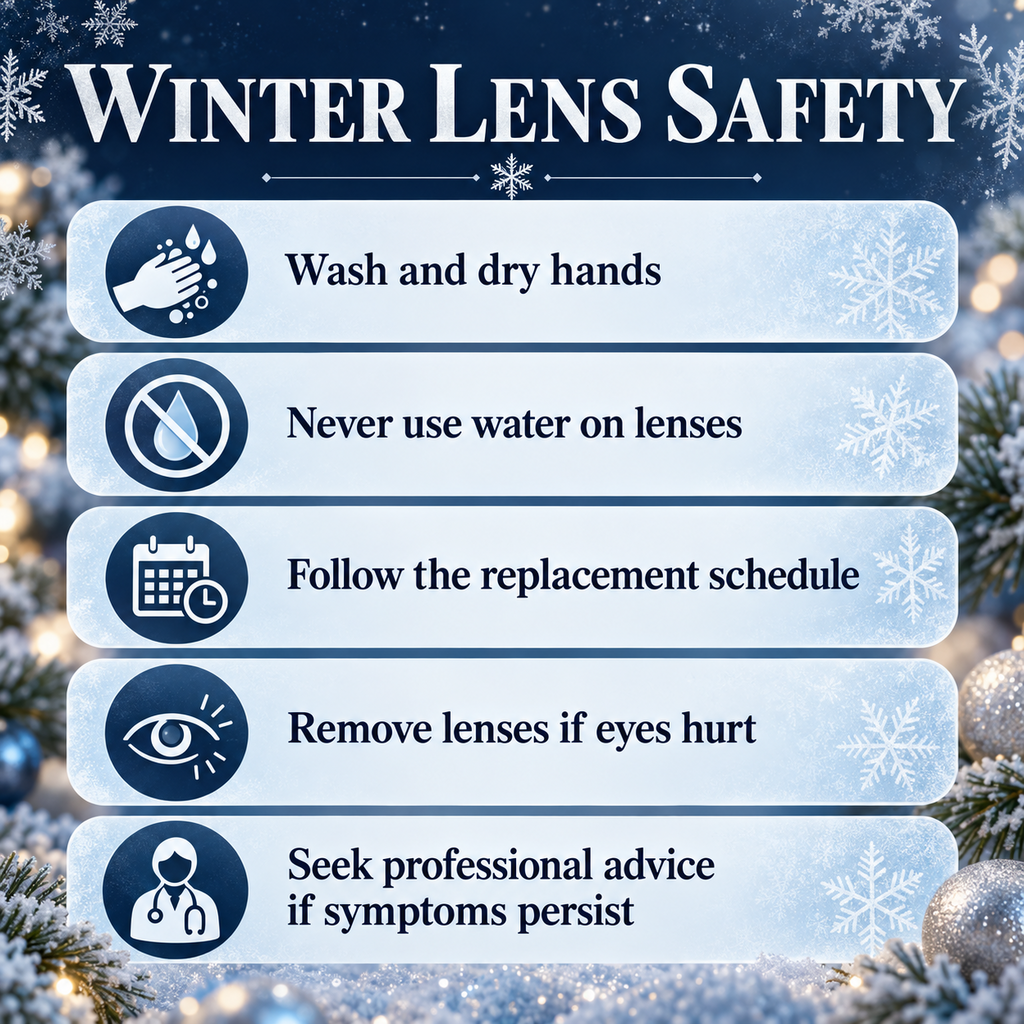
Do not put an uncomfortable lens back in simply to finish an event or photoshoot. Rewetting drops should not be used to mask persistent symptoms.
Can contact lenses freeze on your eyes?
In ordinary winter conditions, the main concern is dryness and wind exposure rather than a contact lens freezing on the eye. Your ocular surface is kept warm by body temperature and the tear film.
An unopened blister or bottle can freeze during storage or delivery in very cold conditions. Do not heat it rapidly or use packaging that is leaking, cloudy or damaged. Allow an unopened product to return gradually to room temperature and follow the manufacturer’s instructions. If there is any doubt about the seal, solution or lens condition, contact the seller or manufacturer before use.
For more detail, read How to Revive Frozen Colored Contact Lenses. That older article should also receive a future medical and manufacturer-guidance review.
Are daily disposable lenses better for winter?
They can be convenient because each wear begins with a fresh lens and there is no case or cleaning routine. However, comfort still depends on the fit, material, prescription, eye health and wearing environment.
A daily disposable lens that does not fit correctly will not become suitable simply because it is new. Ask your eye-care professional whether a different lens, wearing schedule or refitting is appropriate if winter discomfort continues.
Winter contact lens checklist
Before leaving home, check that you have:
- Clean, dry hands before lens handling
- Contact-compatible drops if recommended
- Backup glasses and a protective case
- Sunglasses or suitable winter-sport goggles
- A spare sealed pair if you use daily disposables
- Your normal lens-care supplies when travelling
- A plan to remove the lenses if discomfort begins
Final reminder
Colored and decorative contacts require the same fitting, hygiene and care as vision-correcting contacts. Winter weather may change how comfortable your lenses feel, but persistent pain, redness or blurred vision should never be treated as a normal seasonal inconvenience.
Choose lenses that match your prescription and fitting, follow the recommended replacement schedule, keep water away from them and give your eyes a break whenever they need one.
Yes. Cold wind and dry indoor heating can increase evaporation from the eye’s surface, while longer screen use may reduce complete blinking. Redirect airflow, use only contact-compatible drops when appropriate and ask an eye-care professional for help if discomfort persists.
In ordinary winter conditions, contact lenses are unlikely to freeze on the eye because the ocular surface remains warm. Dryness and wind irritation are the more practical concerns. Packaged lenses can freeze during storage or transit, so follow the manufacturer’s instructions before using them.
They can be convenient because every wear begins with a fresh lens and no cleaning or storage is required. They are not automatically best for everyone; comfort and safety still depend on fitting, material, prescription and eye health.
Not necessarily. Use only drops whose label says they are compatible with your contact lenses, and follow the directions. Some drops require lenses to be removed before use.
Remove them if you experience pain, marked redness, persistent blur, light sensitivity, discharge, swelling or worsening irritation. Use backup glasses and seek professional advice promptly.
Read More: